• Skip to main content
  • Skip to primary sidebar
  • Skip to footer

Dr Karen Wieland

  • About Dr. Karen Wieland
  • Services
    • Individualized Literacy & Dyslexia Instruction
    • Classical Latin Instruction
    • Educator Development for Teachers & Parents
    • Diagnostic Literacy Assessment & Evaluation
  • Testimonials
  • Online Instruction and Tutoring
    • Outschool
    • WyZant
  • Blog
  • Contact

July 25, 2024 By webadmin

Double Trouble!

By James Currie and Dr. Karen Wieland


Whatever to Wear?

If you’ve ever read any of Shakespeare’s plays, or even better – seen – a production of a Shakespeare play, you’ve probably heard about – or seen – a doublet. In the Renaissance, doublets were standard fashion of men – a short jacket, often padded or quilted, with long sleeve, that ended right at the top of their pants (or pant-like equivalents), as illustrated below:
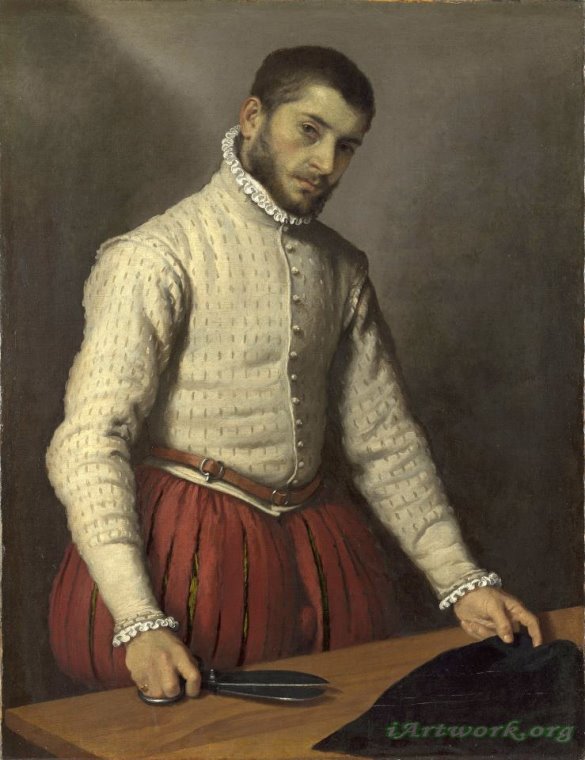
But, if you’ve also read any of our previous posts, you know that this isn’t really a blog about historical fashion trends or articles of clothing. So yes, that is a picture of a man in a doublet, but we’re much more interested in lexical doublets.

Back to the Vocabulary

Linguistics, especially with respect to the etymology of Modern English, also has its own take on ‘the doublet,’ with not a button in sight.

The doublets we’re interested in are, per Merriam-Webster Dictionary, are “two or more words … in the same language derived by different routes of transmission from the same source.” What that means is: English is a sponge – it freely absorbs new words from any language in the world. Among all the borrowings and absorptions, English has borrowed the most from Latin. But our borrowings from Latin did not occur all at the same time or via the same route.  Some come to us indirectly, via a Romance language, most often French. Other words come more directly, occasionally via French or Italian, usually in connection to religion, business or the arts and sciences (and just like that, we’re back in the Renaissance!).

A Little Historical Linguistics

There have been a couple of linguistically critical historical events where large numbers of Latin words entered English. 

The first event was the Norman Conquest of Britain in 1066. The Normans were led by William the Conqueror, who, at the time, was the Duke of Normandy, in northwest France. When William and party arrived in Britain, they didn’t speak Old English/Anglo-Saxon. They spoke Old French, an intermediary Romance Language between Vulgar Latin and (Modern) French. The grammar and lexicon of Old French was predominantly Latin. Enter the first ave of Latin words into English.

The second event was that Renaissance we can’t seem to avoid in this post. The word ‘renaissance’ means ‘born again’ or ‘rebirth’ and comes from the Italian word ‘renascita”, via, surprise!, French. Originating in Italy (and quickly spreading throughout Europe), the Renaissance was truly a rebirth of European civilization from out of the Middle Ages. 

Culturally, there was an effort to revive and surpass the ideas and achievements of classical antiquity. There was an emphasis on education based on classical Greek and Roman sources. It resulted in great social changes in art, architecture, politics, literature, exploration and science. 

Bulging Budgets, From a Little French Pouch

It’s time for an example of a doublet that demonstrates everything we’ve talked about so far. 

Our word “bulge” entered the language around the year 1200. Yes, we hear you, history buffs with calculators, shouting “That’s only 34 years after the Normans invaded! Correct. Bulge is a borrowing from the Norman and their Old French. In England in 1200, ‘bulge’ meant “a wallet” or “a leather bag.” The Old French word was “boulge” and came from Latin “bulga,” which also meant “leather sack”. 
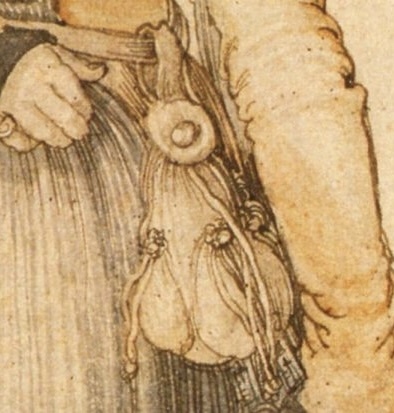
But nowadays, when we use the word “bulge,” we never mean “leather bag” or “wallet.” We mean “to swell” or “a swelling”. This is because the Latin word comes from an even older source, Proto-Indo European, where the original root *bhelgh-” meant to swell. The shift in meaning from wallet to swell happened around the year 1600.

But doublets come in pairs. So, if, in French – Old or Modern, you wanted to say “a little X”, or “a cute, little X”, you add the diminutive suffix -et/-ette. So our cute, little bouge becomes a bouget or a bougette. 

And that’s why the best way to control bulging expenses is with a…”budget.” This doublet is first recorded in English in the early 15th century, which is squarely in the middle of the Renaissance.

More Examples to Come

Dr. Wieland and her tutoring students love to spot doublets in their reading and vocabulary work. In fact, they have already amassed a long list. 

We will be pulling from that list for several more posts on doublets. We’ll also look at doublets from languages other than Latin (though, to be honest, those are few and far between). And if we’re lucky, we’ll even come across the occasional set of triplets – three different words from the same source word.


References

https://en.wikipedia.org/wiki/Renaissance. Retrieved on April 7, 2024.

https://en.wikipedia.org/wiki/Doublet_%28clothing%29. Image retrieved on April 7, 2024.

https://www.merriam-webster.com/dictionary/doublet. Retrieved on April 7, 2024.

Harper, Douglas (2021). Online Etymology Dictionary. Retrieved on April 7, 2024, from etymonline.com.


Share this:

  • Click to share on Twitter (Opens in new window)
  • Click to share on Facebook (Opens in new window)

Filed Under: Lexicon & Word Meaning Change Tagged With: doublet, English, etymology, french

Primary Sidebar

What Others Are Saying…

Awesome Class and Teacher!

Awesome class and teacher! Son is so excited about Latin and Greek!! Plan on taking MANY of Dr Wieland’s classes

Carrie B.Outschool Parent
Incredibly Dedicated, Caring, Friendly

Dr. Karen is an exceptional teacher. I would highly recommend her to any parent seeking foundational instruction spelling and reading. She is incredibly dedicated, caring, friendly, engaged with her student and really knows her stuff! It’s quite clear that, for her, this teaching is a calling rather than an extra source of income. My daughter actually looks forward to her phonics sessions with Dr. Karen. That says a lot. In two weeks of intense sessions, we have already noticed a distinct improv… Read more

DebOutschool Parent
I cannot say enough good things!

Public review of Vocabulary Building with Latin and Greek Roots and Affixes, Level 1  on Outschool:

A wonderful course. Excellent in all aspects. My daughter loved it, the children are offered superb opportunities for participation and for their own research. Invaluable. The children are so lucky to have access to this kind of etymological tuition and insight early in life. Very highly recommended. A whole new perspective on the English language for my daughter, adults around her remark on her v… Read more

IrinaOutschool parent
So Thrilled About This Class!

[My daughter] is so thrilled about this class! She has turned into a voracious reader and she loves to write (and read) poetry. Your reading instruction was really helpful and absolutely catapulted her into the readersphere.

MeghanOutschool Parent
Great Sense of Humor and Enthusiasm

I took a survey on Outschool the other day and they asked me what they could do to make Outschool even better. I said that they should clone Dr. Karen Wieland and have her teaching a lot more classes. I feel like a lot of other Outschool teachers could really benefit from taking a page out of your style guide. The way that you chat with the students and get them warmed up and comfortable, you really allow them to make their discoveries for themselves, and just the way that you maintain a great s… Read more

ChristinaOutschool Parent
Thank you for making this class so much fun

Public review of Vocabulary Building with Latin and Greek Roots and Affixes series on Outschool

. . . Also I want to thank you for making this class so much fun. I love the BINGO games and everything that you do to keep these kids interested while they are learning a lifelong skill. You are doing a lot of good in this world. Rating 5/5

Nicole S.Outschool Parent
My daughter loved Dr. Karen

This is my daughter’s second class with Dr. Karen. She enjoyed the classes and loved Dr. Karen. She especially loved  the educational games that helped her to review what they learned in the class. Rating 5/5

CherylOutschool parent
Dr. Wieland is a fantastic, gifted educator

Public review of Vocabulary Building with Latin and Greek Roots and Affixes series on Outschool:

A wonderful course. Excellent in all aspects. My daughter loved it, the children are offered superb opportunities for participation and for their own research. Invaluable. The children are so lucky to have access to this kind of etymological tuition and insight early in life. Very highly recommended. A whole new perspective on the English language for my daughter, adults around her remark on her voca… Read more

IriniParentOutschool
Very highly recommended

Review of Vocabulary Building with Latin and Greek Roots and Affixes, Level 1 on Outschool:

My daughter loved this class and has asked me to sign her up for the next level. Very highly recommend. Great way to expand vocabulary! – Rating 5/5

Heather COutschool parent
Awesome job with adult dyslexia

Karen did a awesome job of using our time to identify my strengths and weaknesses to ensure she is deploying the most viable resources in the dyslexia field to maximize our efforts.

MarkStudentSt. Louis, MO

Footer

Karen M. Wieland, Ph.D
Salamanca, NY 14779

Call (716) 584-1964

Send A Message to Dr. Wieland

  • Facebook
  • LinkedIn
  • Twitter

Copyright © 2026 Dr. Karen Wieland · Houston Web Design by Blueleaf Creative on the Genesis Framework