• Skip to main content
  • Skip to primary sidebar
  • Skip to footer

Dr Karen Wieland

  • About Dr. Karen Wieland
  • Services
    • Individualized Literacy & Dyslexia Instruction
    • Classical Latin Instruction
    • Educator Development for Teachers & Parents
    • Diagnostic Literacy Assessment & Evaluation
  • Testimonials
  • Online Instruction and Tutoring
    • Outschool
    • WyZant
  • Blog
  • Contact

February 19, 2024 By webadmin

Docendo Discimus – By Teaching, We Learn

By Dr. Karen Wieland and James Currie
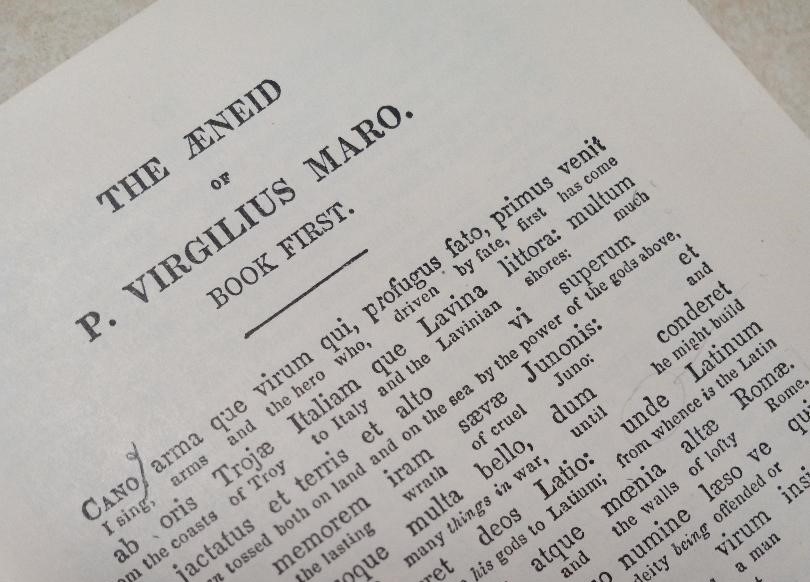
More than HALF!

Did you know that 29% of the words in the English language are derived directly from Latin words? Another 29% are derived from Old French, and the vast majority of these words also can be traced back to Latin. That means that nearly 58% of English is built from Latin. 

There are other world languages that contain more Latin than English. The Romance languages  (those derived from the Roman – e.g., Italian, Spanish, French, Romanian, Portuguese, Catalan, and some older languages) are built from 75%-80% Latin roots. 

Exempli Gratia (a/k/a “e.g.”)

And here’s an example where we can trace the adoption of a word through time from the Roman Empire to today: the word “romance” started out from the Latin word “rōmānus”, meaning “Roman”. That was adapted to the adjective “rōmānicus” which means “in the Roman Style”. Then the word was passed down from Classical Latin to Vulgar Latin to the Roman provinces, including Gaul, now France. In Old French “rōmānicus” became “romanz” which is a short hop, skip, and jump through Middle English (“romaunce”) to the Modern English “romance”. 

As you can see from that example, studying Latin language serves to build knowledge of morphemes (meaningful word parts) that comprise English words and words in Romance languages. Latin study thereby sets the stage for learning any of the Romance languages more quickly.

The Decline and Fall of Latin

My parents were fortunate to attend Catholic schools during the decades when such enrollment involved the daily study of Latin language. For literally hundreds of years, the study of the classics – Latin and Greek – was the cornerstone of anyone’s education, and a requirement for admission to most universities.

In response to WWII, the rise of the Soviet Union and the ensuing Cold War, the U.S. government nudged Latin out of the educational mainstream. The National Defense Strategy Act, enacted in 1958, shifted the focus of education (read: “the funding of”) towards mathematics, the sciences and technology, and modern languages, which were all considered of a greater strategic interest to the U.S. than, say, a ‘dead’ language like Latin (we will debate this designation in a future post).

Most parochial schools abandoned Latin language requirements after Vatican II reforms were enacted by the Catholic Church in 1962. Some college-preparatory high schools retained Latin in their curricula, but the language soon lost out in popularity to other European languages such as Spanish, French, and German. More recently, Latin programs in college-preparatory schools compete for students against Mandarin Chinese and Arabic coursework.

Down, but not Out

Latin language study, however, has undergone a resurgence across the past decade due to the gradual increase in homeschool programs that emphasize classical education. Many families are discovering that Latin language study beginning in the intermediate grades creates a wonderful impetus for English  meaning vocabulary development as well as for future world-language study.

A Worthwhile Challenge

Learning Latin is admittedly a bit harder than learning a contemporary Romance language, because the contemporary Romance languages are more simplified grammatically. However, studying Latin actually promotes the understanding of grammatical and syntactical structures across languages. It is a marvelously intellectual endeavor, and one I wish I had been engaged in from a young age.

How I Can Help

My Introduction to Latin course series on Outschool spans three full academic years of middle-school Latin, which combine to be the equivalent of about one year of high-school Latin. Students enrolled in my courses are encouraged to take the National Latin Exam each spring as a way to gauge and document their proficiency relative to other young Latin scholars.

I also offer private tutorials in Latin, both individually and in small groups, for high school level and college students. I customize each course to the student’s needs, be that a specific textbook series (Cambridge Latin, Henle Latin, Wheelock’s Latin), or at a specific level. For example, I am working with a student who is using Henle Latin in her Classical Conversations homeschool program. I also use Cambridge Latin with another student who aspires to start high-school Latin at the intermediate level, and Wheelock’s Latin with a small group of intermediate-level students who have already completed Latin for Children Books A, B, and C.

Teaching with multiple curricula and at multiple levels has fostered my own learning as well as that of my students. As the saying goes, docendo discimus—by teaching, we learn!

Copyright © 2024 by Karen M. Wieland, Ph.D and James E. Currie, Jr.

This work is licensed under the Creative Commons Attribution-NonCommercial-NoDerivatives 4.0 International License. To view a copy of this license, visit http://creativecommons.org/licenses/by-nc-nd/4.0/.

Share this:

  • Click to share on Twitter (Opens in new window)
  • Click to share on Facebook (Opens in new window)

Filed Under: Latin language instruction Tagged With: Cambridge Latin, classics, Henle Latin, Latin, Wheelock

Primary Sidebar

What Others Are Saying…

OPENED MY EYES

Dr Wieland opened my eyes to the obstacles literacy teachers face at the secondary level. She guided me to change my thinking [ . . . ] to appreciate that even high school aged students might need some basic reading instruction and skills.

AngelynSecondary Social Studies TeacherOtto-Eldredge, NY
Great Energy – Positive Online Experience

My daughter has taken a few classes from Dr. Karen and she never disappoints. Great energy, positive online experience. Though I don’t listen in on the class, I hear saying different kids names to engage everybody. My daughter sees Latin everywhere now- grateful she has this opportunity. Thank you Dr. Karen!

Ruth L.Outschool Parent
It's a great learning environment!

Review of Vocabulary Building with Latin and Greek Roots and Affixes, Level 2 on Outschool: This is our second session with Dr. Karen. I wanted my kiddo to learn lots of definitions by knowing roots and she has also learned how to spell more words. It’s a great learning environment! Thanks Dr. Karen! Rating 5/5

RheaOutschool Parent
Dr. Karen made the class a safe area to make mistakes

Public review of Vocabulary Building with Latin and Greek Roots and Affixes, Level 1 on Outschool: 

Our son is 10 and enjoyed learning about the building blocks Greek & Latin roots into words he uses as well as understanding how to explore the meaning of new words; we could see the wheels turning in his head during the class. He took chances on words that were similar to what they were learning but did not have the same meaning and Dr. Karen provided wonderful redirection and made the cla… Read more
Leslie C.Outschool parent
I love the way the teacher organizes this class

Review of Vocabulary Building with Latin and Greek Roots and Affixes, Level 2 on Outschool:

I love the way the teacher organizes this class, letting the students research on their own. It really helps them remember what they research. Rating: 5/5

Jennifer A.V.Outschool parent
Dr. Karen makes learning vocabulary interesting and fun

Review of Vocabulary Building with Latin and  Greek Roots and Affixes, Level 1 on Outschool:

Dr. Karen is very experienced in teaching the subject matter and interacting with her students. She brings excitement to the class and makes learning vocabulary interesting and fun. My son loved attending class and is looking forward to joining the next level in the series. I strongly recommend this course. Rating: 5/5

Rania E.Outschool parent
We love her!

My son has taken numerous classes with Dr. Karen over the past few years and every single one of them has been wonderful! His reading, writing, and understanding of the English language has just exploded in all of the best ways. She spends so much time with the students and is always engaging. We love her!

ChristinaOutschool Parent
Thank you for making this class so much fun

Public review of Vocabulary Building with Latin and Greek Roots and Affixes series on Outschool

. . . Also I want to thank you for making this class so much fun. I love the BINGO games and everything that you do to keep these kids interested while they are learning a lifelong skill. You are doing a lot of good in this world. Rating 5/5

Nicole S.Outschool Parent
Always Provides Positive Feedback

Our 9 year old opted to take her reading further & Dr Karen came highly recommended. It can be hard to gauge a child’s progress but if you measured against the tangibles of enjoyment & self-directed readiness to do homework, then Dr Karen’s lessons most definitely get 5 stars from us both. For us, connection is key to growing learning. Dr Karen naturally asked about interests & connected, maintaining interest & focus. Dr Karen’s managed to always find a sincere way to provide positive feedback t… Read more

EmmaParent
Fantastic World of Words

Can’t wait to sign up for more classes with Dr. Karen. Dr. Karen engages kids with her passion for teaching that doesn’t overwhelm- but invites kids into this fantastic world of thoughts about words I never knew existed. Thank you Dr. Karen!!

Mary Jane L.Outschool Parent

Footer

Karen M. Wieland, Ph.D
Salamanca, NY 14779

Call (716) 584-1964

Send A Message to Dr. Wieland

  • Facebook
  • LinkedIn
  • Twitter

Copyright © 2026 Dr. Karen Wieland · Houston Web Design by Blueleaf Creative on the Genesis Framework